Articles

 In an excerpt from the poem entitled The Last Speech of the
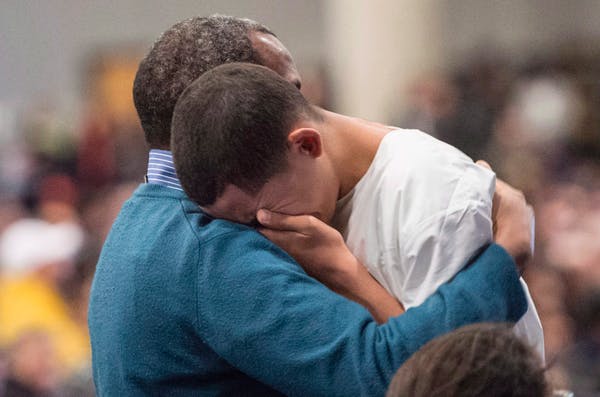
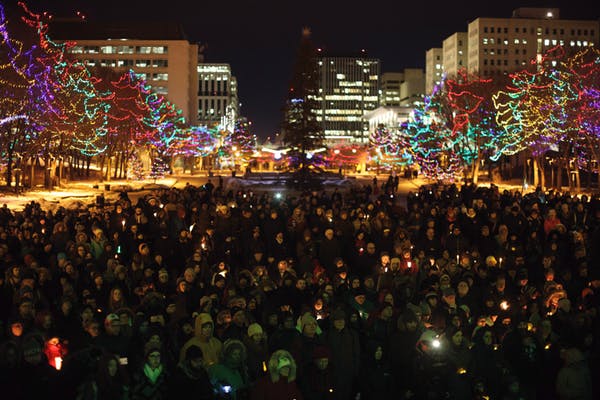
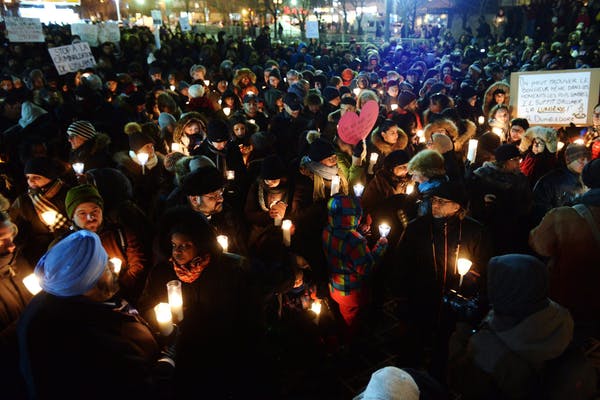
The Québec City mosque massacre, the worst
mass murder to take place in a house of
worship in Canadian history, was a shock to
Canada’s multicultural utopia.
In an excerpt from the poem entitled The Last Speech of the
The Québec City mosque massacre, the worst
mass murder to take place in a house of
worship in Canadian history, was a shock to
Canada’s multicultural utopia.
A local halal grocery store owner, a
professor at Université Laval, three civil
servants and a pharmacy worker were brutally
killed on Jan. 29, 2017. The six men,
originally from Morocco, Algeria and Guinea,
were fathers, sons, husbands, brothers:
Ibrahima Barry, aged 39, Mamadou Tanou
Barry, 42, Khaled Belkacemi, 60, Aboubaker
Thabti, 44, Abdelkrim Hassane, 41, and
Azzedine Soufiane, 57.
Yet the rising Islamophobia in Canada had
impacted Muslims long before this tragedy.
And not surprising to many, the hatred has
continued to rise.
Hate crimes on the rise
 Statistics Canada found hate crimes against
Muslims in Canada grew 253 per cent from
2012 to 2015. It got even worse:
police-reported general hate crimes shot up
by 50 per cent in 2017 reaching a new
all-time high. These numbers are largely
driven by incidents targeting Muslim, Jewish
and Black people with the increases being
driven mainly by events in Ontario and
Québec.
Statistics Canada found hate crimes against
Muslims in Canada grew 253 per cent from
2012 to 2015. It got even worse:
police-reported general hate crimes shot up
by 50 per cent in 2017 reaching a new
all-time high. These numbers are largely
driven by incidents targeting Muslim, Jewish
and Black people with the increases being
driven mainly by events in Ontario and
Québec.
Muslims have been constructed as the
“enemies within” and represent the new folk
devils that threaten the stability of the
nation. According to a 2017 Radio Canada
poll, most Canadians (74 per cent) favour a
Canadian values test for Muslim immigrants,
while 23 per cent favour a ban on Muslim
immigration, a level of support that rises
to 32 per cent in Québec.
White nationalism in Canada
Alexandre Bissonnette, who has pleaded
guilty to six counts of first-degree murder
and six counts of attempted murder in Québec
City, spent the day of the attack drinking
alcohol, reading stories about President
Trump’s Muslim ban and visiting the Twitter
feeds of extreme right personalities Ann
Coulter, Bill O'Reilly and the Facebook page
of France’s far-right Front National leader
Marine Le Pen. He was reportedly angered
over a Jan. 29 tweet by Justin Trudeau on
welcoming refugees to Canada and left his
parents’ house armed with a gun and racist,
anti-Muslim, xenophobic hate.
 Media reports rushed to blame this tragedy
on anti-Muslim hatred south of the border,
exemplified by U.S. President Donald Trump’s
Islamophobic rhetoric and policies. But a
study about the white nationalist website
Stormfront found that Islamophobic
sentiments were more prominent from Canadian
subscribers than in the United States.
Media reports rushed to blame this tragedy
on anti-Muslim hatred south of the border,
exemplified by U.S. President Donald Trump’s
Islamophobic rhetoric and policies. But a
study about the white nationalist website
Stormfront found that Islamophobic
sentiments were more prominent from Canadian
subscribers than in the United States.
Canada has its own history of policies that
promote Islamophobia. For example, the
Harper era was riddled with policies that
target Muslims, such as the “Zero Tolerance
for Barbaric Cultural Practices Act,”
Security Certificates (involving secret
evidence and trials), the Anti-Terrorism Act
and the proposed niqab ban at citizenship
ceremonies. Many of these policies still
exist, however, there is no longer a niqab
ban at citizenship ceremonies and Senate has
passed a Bill to remove the language
“barbaric” from the “Barbaric Cultural
Practices Act.”
 Québec’s policies, such as Bill 94 banning
the niqab from public and civic spaces and
the Charter of Values, also contributed to
this breeding ground of Islamophobic fear
and white angst.
Québec’s policies, such as Bill 94 banning
the niqab from public and civic spaces and
the Charter of Values, also contributed to
this breeding ground of Islamophobic fear
and white angst.
The breeding grounds of white nationalism
and xenophobia are rife online. Stepping out
of the shadows of internet chat rooms and
congregating openly through public rallies
across Canada over the past two years, the
presence of white supremacist nationalism is
gaining renewed impetus. There are
approximately 100 white supremacist groups
operating in Canada. The Canada Border
Services Agency found that “right-wing
ideology” in Alberta is growing.
Police are investigating members of an
anti-Islam group reportedly having ties to
(white supremacist groups) “The Clann
Northern Alberta Infidel Division” and
“Wolves of Odin” who confronted worshippers
at Canada’s first mosque, Al-Rashid Mosque
in Edmonton this January. They were
“scouting” the premises and harassing
community members in the parking lot.
In early February, three men and one high
school student were arrested in upstate New
York for planning attacks against a Muslim
community in Islamberg. They were found to
be in possession of numerous guns and
explosive devices. They were described as
“former Boy Scouts” in the news report. The
“Boy Scout” narrative is an example of
“white exceptionalism” where white
assailants are seen as a “few bad apples”
spoiling the bunch. This exceptionalism
allows white people to be seen as
individuals and not members of their group.
Muslim or other racialized groups will
always bear the collective guilt and
responsibility for actions committed (or
alleged). For example, the recent RCMP
arrests of two Muslim men on alleged terror
charges in Kingston, Ont. led to
Conservative leader Andrew Scheer calling
for tighter controls on refugees to Canada.
Responses to the tragedy
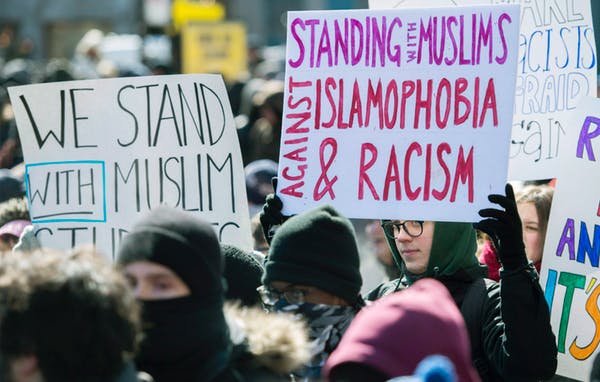 The report following the Parliamentary
hearings on Motion 103 (a non-binding motion
asking the Canadian government to condemn
Islamophobia) and systemic racism largely
sidelined the issue of Islamophobia which
was the original impetus for this inquiry
following the Québec shootings. Out of 30
recommendations, only one mentions
Islamophobia as part of a generic statement
condemning systemic racism and religious
discrimination.
The report following the Parliamentary
hearings on Motion 103 (a non-binding motion
asking the Canadian government to condemn
Islamophobia) and systemic racism largely
sidelined the issue of Islamophobia which
was the original impetus for this inquiry
following the Québec shootings. Out of 30
recommendations, only one mentions
Islamophobia as part of a generic statement
condemning systemic racism and religious
discrimination.
Moreover Pablo Rodriguez, Minister of
Canadian Heritage and Multiculturalism
declared: “systemic racism” was “not a part
of (his) vocabulary.” Such a comment means
that the problem of systemic oppression is
being reduced to an individual concern which
conveniently absolves the state and its
institutions from being complicit in
promoting racism, religious discrimination
and Islamophobia.
Despite these disappointing developments,
the survivors of the Québec City shooting
have joined survivors of the Montréal
Polytechnique massacre in 1989 in raising
awareness of gun violence. The heroic and
selfless actions of Aymen Derbali who was
paralyzed after trying to stop the shooter
and saved countless lives should serve to
dislodge the destructive stereotypes of
“radical” Muslims in conflict with Canadian
values, but his sacrifice also remains as a
mere footnote to this tragedy.
Muslim groups across the country have called
for Jan. 29 to be designated as a National
Day of Remembrance and Action on
Islamophobia. Making it a federal day would
be an act of solidarity that would help to
ensure the lessons learned from this tragedy
will not be forgotten.
---
^
Jasmin Zine: Professor of Sociology, Wilfrid
Laurier University
** Photos: Canadian Press by: Graham Hughes,
Ryan Remiorz, Jason Franson, Paul Chiasson
Leave a Comment
Your Comment is Received .. Thank You
In an excerpt from the poem entitled The Last Speech of the
The Québec City mosque massacre, the worst
mass murder to take place in a house of
worship in Canadian history, was a shock to
Canada’s multicultural utopia.A local halal grocery store owner, a professor at Université Laval, three civil servants and a pharmacy worker were brutally killed on Jan. 29, 2017. The six men, originally from Morocco, Algeria and Guinea, were fathers, sons, husbands, brothers: Ibrahima Barry, aged 39, Mamadou Tanou Barry, 42, Khaled Belkacemi, 60, Aboubaker Thabti, 44, Abdelkrim Hassane, 41, and Azzedine Soufiane, 57.
Yet the rising Islamophobia in Canada had impacted Muslims long before this tragedy. And not surprising to many, the hatred has continued to rise.
Statistics Canada found hate crimes against
Muslims in Canada grew 253 per cent from
2012 to 2015. It got even worse:
police-reported general hate crimes shot up
by 50 per cent in 2017 reaching a new
all-time high. These numbers are largely
driven by incidents targeting Muslim, Jewish
and Black people with the increases being
driven mainly by events in Ontario and
Québec.Muslims have been constructed as the “enemies within” and represent the new folk devils that threaten the stability of the nation. According to a 2017 Radio Canada poll, most Canadians (74 per cent) favour a Canadian values test for Muslim immigrants, while 23 per cent favour a ban on Muslim immigration, a level of support that rises to 32 per cent in Québec.
Media reports rushed to blame this tragedy
on anti-Muslim hatred south of the border,
exemplified by U.S. President Donald Trump’s
Islamophobic rhetoric and policies. But a
study about the white nationalist website
Stormfront found that Islamophobic
sentiments were more prominent from Canadian
subscribers than in the United States.Canada has its own history of policies that promote Islamophobia. For example, the Harper era was riddled with policies that target Muslims, such as the “Zero Tolerance for Barbaric Cultural Practices Act,” Security Certificates (involving secret evidence and trials), the Anti-Terrorism Act and the proposed niqab ban at citizenship ceremonies. Many of these policies still exist, however, there is no longer a niqab ban at citizenship ceremonies and Senate has passed a Bill to remove the language “barbaric” from the “Barbaric Cultural Practices Act.”
Québec’s policies, such as Bill 94 banning
the niqab from public and civic spaces and
the Charter of Values, also contributed to
this breeding ground of Islamophobic fear
and white angst.The breeding grounds of white nationalism and xenophobia are rife online. Stepping out of the shadows of internet chat rooms and congregating openly through public rallies across Canada over the past two years, the presence of white supremacist nationalism is gaining renewed impetus. There are approximately 100 white supremacist groups operating in Canada. The Canada Border Services Agency found that “right-wing ideology” in Alberta is growing.
Police are investigating members of an anti-Islam group reportedly having ties to (white supremacist groups) “The Clann Northern Alberta Infidel Division” and “Wolves of Odin” who confronted worshippers at Canada’s first mosque, Al-Rashid Mosque in Edmonton this January. They were “scouting” the premises and harassing community members in the parking lot.
In early February, three men and one high school student were arrested in upstate New York for planning attacks against a Muslim community in Islamberg. They were found to be in possession of numerous guns and explosive devices. They were described as “former Boy Scouts” in the news report. The “Boy Scout” narrative is an example of “white exceptionalism” where white assailants are seen as a “few bad apples” spoiling the bunch. This exceptionalism allows white people to be seen as individuals and not members of their group.
Muslim or other racialized groups will always bear the collective guilt and responsibility for actions committed (or alleged). For example, the recent RCMP arrests of two Muslim men on alleged terror charges in Kingston, Ont. led to Conservative leader Andrew Scheer calling for tighter controls on refugees to Canada.
The report following the Parliamentary
hearings on Motion 103 (a non-binding motion
asking the Canadian government to condemn
Islamophobia) and systemic racism largely
sidelined the issue of Islamophobia which
was the original impetus for this inquiry
following the Québec shootings. Out of 30
recommendations, only one mentions
Islamophobia as part of a generic statement
condemning systemic racism and religious
discrimination.Moreover Pablo Rodriguez, Minister of Canadian Heritage and Multiculturalism declared: “systemic racism” was “not a part of (his) vocabulary.” Such a comment means that the problem of systemic oppression is being reduced to an individual concern which conveniently absolves the state and its institutions from being complicit in promoting racism, religious discrimination and Islamophobia.
Despite these disappointing developments, the survivors of the Québec City shooting have joined survivors of the Montréal Polytechnique massacre in 1989 in raising awareness of gun violence. The heroic and selfless actions of Aymen Derbali who was paralyzed after trying to stop the shooter and saved countless lives should serve to dislodge the destructive stereotypes of “radical” Muslims in conflict with Canadian values, but his sacrifice also remains as a mere footnote to this tragedy.
Muslim groups across the country have called for Jan. 29 to be designated as a National Day of Remembrance and Action on Islamophobia. Making it a federal day would be an act of solidarity that would help to ensure the lessons learned from this tragedy will not be forgotten.
---
^ Jasmin Zine: Professor of Sociology, Wilfrid Laurier University
** Photos: Canadian Press by: Graham Hughes, Ryan Remiorz, Jason Franson, Paul Chiasson
Leave a Comment
Your Comment is Received .. Thank You
Advertise With Us